Welcome to my blog folio for Symbols and Distribution!
The posts underneath reveal my learning and growth in this subject, and display the course content. I thoroughly enjoyed observing and discovering a deeper meaning from symbols that we take for granted. I found it a great challenge to simplify something down, yet make it so that it is still recognisable. Overall i am more observant of the life and symbols around me and look forward to continuing the learning process.
Hope you enjoy :)
Monday, October 11, 2010
Week 9 Sound Symbol
My sound symbol

Trying to represent something intangible such as sound, proved very hard when it came to creating a symbol for sound. The concept behind my symbol is the circle representing the source of the sound, and the rays representing the vibrations and sounds coming from the source. It can also be interpreted as a speaker. I would be very interested too see the best way to show sound in symbol form!

Trying to represent something intangible such as sound, proved very hard when it came to creating a symbol for sound. The concept behind my symbol is the circle representing the source of the sound, and the rays representing the vibrations and sounds coming from the source. It can also be interpreted as a speaker. I would be very interested too see the best way to show sound in symbol form!
Week 9 Intangible Symbol
Dreams
Dreams are intangible, mysterious and have been a topic of fascination over the years. Sometimes we remember them, and sometimes not, but thing is for certain - we don't know why or how they happen. There has been theories that representations in ones dreams, can actually mean something.
For example:
Rainbows: Messages, prayers, being taken and delivered.
Running: Inner desire to fight or reach something. Giving best efforts. Or running from fears.
Wings: Liberation and blessing
Falling: Something major in your life is going in the wrong direction
Teeth falling out: You may have been gossiping ir saying something that you wish you didn't
Back at school: Usually about your job, are you being tested? or do you want to climb the corporate ladder?
Being late: A missed opportunity, inability to make connections
Weather myth or proven symbolic representations, people can all relate to one another, through the topic of dreams, even though their dreams differ. It has become a part of popular culture to 'have big dreams' and get lost in them, which is a great sign of symbolism spreading through words and you can not see or touch a dream.

Dreams are intangible, mysterious and have been a topic of fascination over the years. Sometimes we remember them, and sometimes not, but thing is for certain - we don't know why or how they happen. There has been theories that representations in ones dreams, can actually mean something.
For example:
Rainbows: Messages, prayers, being taken and delivered.
Running: Inner desire to fight or reach something. Giving best efforts. Or running from fears.
Wings: Liberation and blessing
Falling: Something major in your life is going in the wrong direction
Teeth falling out: You may have been gossiping ir saying something that you wish you didn't
Back at school: Usually about your job, are you being tested? or do you want to climb the corporate ladder?
Being late: A missed opportunity, inability to make connections
Weather myth or proven symbolic representations, people can all relate to one another, through the topic of dreams, even though their dreams differ. It has become a part of popular culture to 'have big dreams' and get lost in them, which is a great sign of symbolism spreading through words and you can not see or touch a dream.

Monday, September 27, 2010
Week 8
Cause Poster

This cause poster represents our cause as well as what we plan to achieve in our distribution. The tag line is part of our distribution plan and the flowers symbolise part of distribution as well.

This cause poster represents our cause as well as what we plan to achieve in our distribution. The tag line is part of our distribution plan and the flowers symbolise part of distribution as well.
Monday, September 13, 2010
Week 7 Philosophy

Philosophical Symbols -
The Triquetra
A triquetra is a three cornered shape which is used as a symbol in many cultures, ranging from traditional Christianity to pagan Celtic traditions. You may be most familiar with the triquetra in the role of Celtic art, where it appears extensively in a wide array of situations, from carved headstones to motifs in Celtic paintings. This design can be utilitarian and very simple, or incredibly ornate and quite beautiful, in the case of complex Celtic knotwork.
Typically, a triquetra is formed by interlocking three identical shapes to create a distinctive three-cornered pattern. Archaeological evidence suggests that the triquetra has been an important symbol in Celtic art for centuries, and it was also extensively used in Germanic paganism. Triquetras can be found on many rune stones, for example, and they also appear in wooden and stone carvings found throughout Northern Europe.
http://www.wisegeek.com/what-is-a-triquetra.htm
This symbol has stood the test of time, and has been interpreted by many different cultures. This proves a symbol with great integrity and representation
Week 7 Pixel Portraits


peter, dave, neil, lulu, ingrid
The aim with the pixel portraits was to get as much detail as possible using minimal colours. I found it easiest in the end to remember the person as i see them in real life and really exaggerate their stand out features. I was really happy with my end result when i saw the portraits at the actual size.
Final Chosen Logo

Monday, August 30, 2010
In class exercise Week 6 - Rebus
Rebus: A puzzle consisting of pictures representing syllables and words; in such a puzzle the word hear might be represented by H followed by a picture of an ear

Our rebus: The lights are on but nobodies home
Our group did not entirely understand the idea of the rebus. We did not have enough symbols that represented an actual sound. After seeing other groups and examples that Nigel gave us, i had a clearer understanding of a Rebus.

Our rebus: The lights are on but nobodies home
Our group did not entirely understand the idea of the rebus. We did not have enough symbols that represented an actual sound. After seeing other groups and examples that Nigel gave us, i had a clearer understanding of a Rebus.
Week 6 - Symbols and Revolution
The Jesus revolution
“It has been said that Christianity has two great branches – Catholic and Protestant. Some are now saying that there are three branches – Catholic, Protestant, and Pentecostal.
Pentecostalism itself is not a denomination, but a rapidly growing religious phenomenon among all major sections of Christendom. Religious commentators are beginning to recognize it as the third force in the Christian world. Sometimes called "the Charismatic movement," it is no longer confined to the small Pentecostal groups as it once was. This activity is becoming quite widespread within the Catholic Church as well as the more conservative Protestant denominations. It can be identified by the experience of speaking in tongues (glossolalia). Interdenominational groups, like the Full Gospel Business Men's Fellowship International, are very active in spreading the "Pentecostal baptism of the Spirit." So many charismatic groups are springing up, especially in the youth generation, that this movement has been dubbed "the Jesus Revolution.
In Short the movement has said to:
1. Pentecostalism Lacks the Apostolic Emphasis on the Gospel of Christ
2. 2. The Pentecostal Movement Is Based on Subjective Experience Rather Than on the Objective Word of God
3. Pentecostalism is More Catholic Than Protestant
4. 4. Pentecostal Theology Degrades God Into a Popular Somebody.
5. 5. The Pentecostal Experience Lacks the New Testament Emphasis on Repentance, Faith, and Obedience
6. 6. Pentecostalism Represents Love (Agape) As an Emotional Experience”
http://www.presenttruthmag.com/archive/I/1-3.htm
Today with shopping centre’s, life centre’s, number one hits on the music charts and private colleges, the revolution has said to stack votes n Australian reality TV shows, had financial criticism and involvement with controversial organisations. The movement has been hugely popular within youth and has spread internationally.
“It has been said that Christianity has two great branches – Catholic and Protestant. Some are now saying that there are three branches – Catholic, Protestant, and Pentecostal.
Pentecostalism itself is not a denomination, but a rapidly growing religious phenomenon among all major sections of Christendom. Religious commentators are beginning to recognize it as the third force in the Christian world. Sometimes called "the Charismatic movement," it is no longer confined to the small Pentecostal groups as it once was. This activity is becoming quite widespread within the Catholic Church as well as the more conservative Protestant denominations. It can be identified by the experience of speaking in tongues (glossolalia). Interdenominational groups, like the Full Gospel Business Men's Fellowship International, are very active in spreading the "Pentecostal baptism of the Spirit." So many charismatic groups are springing up, especially in the youth generation, that this movement has been dubbed "the Jesus Revolution.
In Short the movement has said to:
1. Pentecostalism Lacks the Apostolic Emphasis on the Gospel of Christ
2. 2. The Pentecostal Movement Is Based on Subjective Experience Rather Than on the Objective Word of God
3. Pentecostalism is More Catholic Than Protestant
4. 4. Pentecostal Theology Degrades God Into a Popular Somebody.
5. 5. The Pentecostal Experience Lacks the New Testament Emphasis on Repentance, Faith, and Obedience
6. 6. Pentecostalism Represents Love (Agape) As an Emotional Experience”
http://www.presenttruthmag.com/archive/I/1-3.htm
Today with shopping centre’s, life centre’s, number one hits on the music charts and private colleges, the revolution has said to stack votes n Australian reality TV shows, had financial criticism and involvement with controversial organisations. The movement has been hugely popular within youth and has spread internationally.
Monday, August 23, 2010
Week 5 - Cause Symbol
Cause - Green Lungs
Aim - More green space in the city. Directed at people who live and work in the city.
Mission statement - We need people to think about nature and how they use it."
- Once you destroy green space, you destroy it forever
- There have been two previous attempts in Sydney to reintroduce green space, both of which have failed
- We want to use Sydney as a model, but the same thing could be applied to other cities in the world
- Something like Earth Hour, Embraced by all - powerful, meaningful. Could possibly be a yearly event
- We want a distinct name, image, distribution, it must be cheap or free and have a lasting effect
- We are arresting a trend - Plants on balconies and backyards
- Don't get too wrapped up in environmental issues, this is more about quality of life
- Target market is late 20's, and people who own property
- Think about sustainability in distribution
- The effect must be immediate, not over time (eg planting a tree)
- Don't let people think you're after money
- Chalk feet video
- Think about dress and theme
- How can we approach people in a different way?
- No standing and handing out pamphlets wearing tree costumes
- How can we collect measurable info? (Website, social networks?)
- Using multiple media
- How do we interact with real people?
- The symbol must represent the cause, not tell the whole story
Our chosen favourite

Draft versions for client approval

Aim - More green space in the city. Directed at people who live and work in the city.
Mission statement - We need people to think about nature and how they use it."
- Once you destroy green space, you destroy it forever
- There have been two previous attempts in Sydney to reintroduce green space, both of which have failed
- We want to use Sydney as a model, but the same thing could be applied to other cities in the world
- Something like Earth Hour, Embraced by all - powerful, meaningful. Could possibly be a yearly event
- We want a distinct name, image, distribution, it must be cheap or free and have a lasting effect
- We are arresting a trend - Plants on balconies and backyards
- Don't get too wrapped up in environmental issues, this is more about quality of life
- Target market is late 20's, and people who own property
- Think about sustainability in distribution
- The effect must be immediate, not over time (eg planting a tree)
- Don't let people think you're after money
- Chalk feet video
- Think about dress and theme
- How can we approach people in a different way?
- No standing and handing out pamphlets wearing tree costumes
- How can we collect measurable info? (Website, social networks?)
- Using multiple media
- How do we interact with real people?
- The symbol must represent the cause, not tell the whole story
Our chosen favourite

Draft versions for client approval

In-class exercise Week 4

click to enlarge
This exercise was great in trying to achieve a simplified way of showing many different words and situations. I found this quite challenging at first but as i went on, i started to think more simple and refined.
Week 4 - Evolution - Symbols & meaning
'The Cross' - powerful, mystical, pain and torture, christ, opression
'Red Cross' - safe, good, positive relationship
'I heart New York' - A set of signs that appear to be writing
"Peace fingers' - can mean "fuck off" or peace turned around
the peace sign itself has also changed over time :

'Red Cross' - safe, good, positive relationship
'I heart New York' - A set of signs that appear to be writing
"Peace fingers' - can mean "fuck off" or peace turned around
the peace sign itself has also changed over time :

Monday, August 9, 2010
Week 3 - Superstitons
In Class Exercise
Humpty Dumpty

Superstitions
Superstitions began centuries ago when our ancestors tried to explain mysterious circumstances or events as best as they could with the knowledge they had.
For instance, before the development of science explained such strange things as why mirrors show our reflections or why shadows appear when it’s sunny, ancient people reasoned that a shadow or reflection was part of their soul.
If someone broke something onto which the shadow or reflection appeared, people believed that their soul was harmed. Therefore, when a person broke a mirror it was considered unlucky or harmful.
Today we know that reflections and shadows are not part of our souls but if someone still believes it is bad luck to break a mirror they are said to be superstitious.
So a superstition is a belief or practice that people cling to even after new knowledge or facts prove that these silly beliefs are untrue.
Common superstitions:
Friday the thirteenth is an unlucky day
An apple a day keeps the doctor away
To find a four-leaf clover is to find good luck
If you walk under a ladder, you will have bad luck
If a black cat crosses your path you will have bad luck
To break a mirror will bring you seven years bad luck
To open an umbrella in the house is to bring bad luck
To find a horseshoe brings good luck
At the end of a rainbow is a pot of gold


When researching superstitions it became clear to me how symbols have transformed, evolved and spread. I have heard so many common superstitions throughout my life but never before realised how they come about. This is proof in how individuals have a higher power to influence many over a long period of time.
Humpty Dumpty

Superstitions
Superstitions began centuries ago when our ancestors tried to explain mysterious circumstances or events as best as they could with the knowledge they had.
For instance, before the development of science explained such strange things as why mirrors show our reflections or why shadows appear when it’s sunny, ancient people reasoned that a shadow or reflection was part of their soul.
If someone broke something onto which the shadow or reflection appeared, people believed that their soul was harmed. Therefore, when a person broke a mirror it was considered unlucky or harmful.
Today we know that reflections and shadows are not part of our souls but if someone still believes it is bad luck to break a mirror they are said to be superstitious.
So a superstition is a belief or practice that people cling to even after new knowledge or facts prove that these silly beliefs are untrue.
Common superstitions:
Friday the thirteenth is an unlucky day
An apple a day keeps the doctor away
To find a four-leaf clover is to find good luck
If you walk under a ladder, you will have bad luck
If a black cat crosses your path you will have bad luck
To break a mirror will bring you seven years bad luck
To open an umbrella in the house is to bring bad luck
To find a horseshoe brings good luck
At the end of a rainbow is a pot of gold


When researching superstitions it became clear to me how symbols have transformed, evolved and spread. I have heard so many common superstitions throughout my life but never before realised how they come about. This is proof in how individuals have a higher power to influence many over a long period of time.
Monday, August 2, 2010
Week 2 - Symbols and Groups
- formed by interest
-found in history - battles, fights, taking sides > individuals began to advertise and identify through symbols
(eg men encouraged to form groups with war (peer pressure))
Why do we join groups?
.belonging
.power
.social acceptance
.patriotism
.sports team
....some questions to think about
- How many groups do you belong to?
- How do you recognise each other?
- Do we all recognise your symbols?
- Which groups did you choose to join?
- Which group do you want to leave?
Groups you may not have control over include: slaves, class segregation, prisioners
Other groups: football, armish, religion, gangs, police force, bands, hobos, masons
++ We tend to symoblise through language and dress
> We use symbols to imply meaning but we sometimes change the meaning in the process.
-found in history - battles, fights, taking sides > individuals began to advertise and identify through symbols
(eg men encouraged to form groups with war (peer pressure))
Why do we join groups?
.belonging
.power
.social acceptance
.patriotism
.sports team
....some questions to think about
- How many groups do you belong to?
- How do you recognise each other?
- Do we all recognise your symbols?
- Which groups did you choose to join?
- Which group do you want to leave?
Groups you may not have control over include: slaves, class segregation, prisioners
Other groups: football, armish, religion, gangs, police force, bands, hobos, masons
++ We tend to symoblise through language and dress
> We use symbols to imply meaning but we sometimes change the meaning in the process.
In-class exercise Week 2

Tribe name and symbol
-- first we were asked to brainstorm the individual values in the tribe and from there create an identity.
Our group name is awkward turtle and our mind map is as follows:

Paragraph:
Sentence:
Word:
Symbol:
Symbols and Groups
Group Identifiers


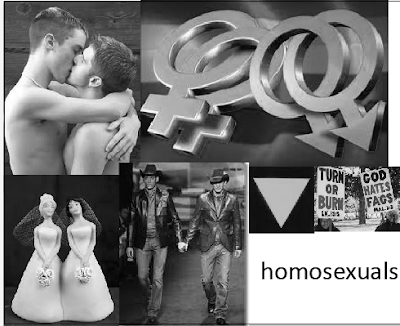

[Teenager] -
a person between the ages of 13 and 19 inclusive
+symbolised by the way they dress(funky/young), speak(slang), the technologies they use
you do not have control over being in this group
[Homosexual] -
a person who is sexually attracted to members of the same sex
+symbolised by where they live, who they are seen with, they way they dress and talk
[Muslim] -
of or relating to Islam, its doctrines, culture, etc
+symbolised by the burka, praying traditions, tradition dress, flag
[Skate punk]-
hardcore punk scene, that is named after its popularity and association with skateboarders.
+ symbolised by black dress, tattoos, language, skateboards, rough image
[Hip-hop] -
Hip hop music is a musical genre that developed as part of hip hop culture, and is defined by four key stylistic elements such as rapping, DJing/scratching
+symbolised by baggy clothing, chains, language, music,
For all of the above groups, the individuals group determines a large part of their lifestyle. The way the act, talk, dress and who they associate with. Quite often society places a stereotypical label on specific groups depending on how they are symbolised. Groups make themselves easy to identify by symbolic, and recognised ways of life.


[Teenager] -
a person between the ages of 13 and 19 inclusive
+symbolised by the way they dress(funky/young), speak(slang), the technologies they use
you do not have control over being in this group
[Homosexual] -
a person who is sexually attracted to members of the same sex
+symbolised by where they live, who they are seen with, they way they dress and talk
[Muslim] -
of or relating to Islam, its doctrines, culture, etc
+symbolised by the burka, praying traditions, tradition dress, flag
[Skate punk]-
hardcore punk scene, that is named after its popularity and association with skateboarders.
+ symbolised by black dress, tattoos, language, skateboards, rough image
[Hip-hop] -
Hip hop music is a musical genre that developed as part of hip hop culture, and is defined by four key stylistic elements such as rapping, DJing/scratching
+symbolised by baggy clothing, chains, language, music,
For all of the above groups, the individuals group determines a large part of their lifestyle. The way the act, talk, dress and who they associate with. Quite often society places a stereotypical label on specific groups depending on how they are symbolised. Groups make themselves easy to identify by symbolic, and recognised ways of life.
Monday, July 26, 2010
Week 1 - Directional Symbols
A symbol is 'a sign that has no connection between the sign and what it means. It relies exclusively on the reader having learnt the connection between the sign and its meaning'
+ a symbol does not work if there is any doubt to what it is
++ we can store 2000 images but over 50 000 words and we are constantly reading and seeing new ones
- visual clues
- understanding culture
- reading and seeing
- a good symbol should work in any culture with someone who can read and someone who cant
- symbols can have 2 messages
[ANALOGUE] - continues, you experience something - it moves on
[DIGITAL] - something you break down ie. letters
iconic sings - have a meaning, symbolic eg. photographs
iconic words - POW!, smashed! (humans make 41 sounds)
semantic - danger affiliation
pseudo writing - abbreviating eg. txt msging and I <3>
>pictograph - object/action, oldest symbols, we draw what we want to explain
>phonogram - sound mark
>ideogram - concept/ idea


In-class exercise Week 1

[TANGRAM] ;The tangram is a dissection puzzle consisting of seven flat shapes, called tans, which are put together to form shapes. The objective of the puzzle is to form a specific shape (given only in outline or silhouette) using all seven pieces, which may not overlap.
Far left: Flower in pot, Top right: Tow truck/ute, Bottom right: Kettle with Steam, Top middle: Fish, Bottom middle: Action figure
This exercise led to a different way of thinking. At first it was a challenge but after some time the shapes began to flow quicker and i was able to see figures in a more creative/child-like way.
Directional Symbols

Exit Symbol: Directing people the safest and easiest way to exit in case of an emergency

Walking path: Symbol letting people know it is safe to walk on the path provided

Crossing: Symbol directing congestion to a safe place of crossing

Walk: Symbol directing people that its safe to walk to the other side when lit

Stand left: Symbol directing people to stand left when on an escalator to prevent hold ups

Subscribe to:
Posts (Atom)